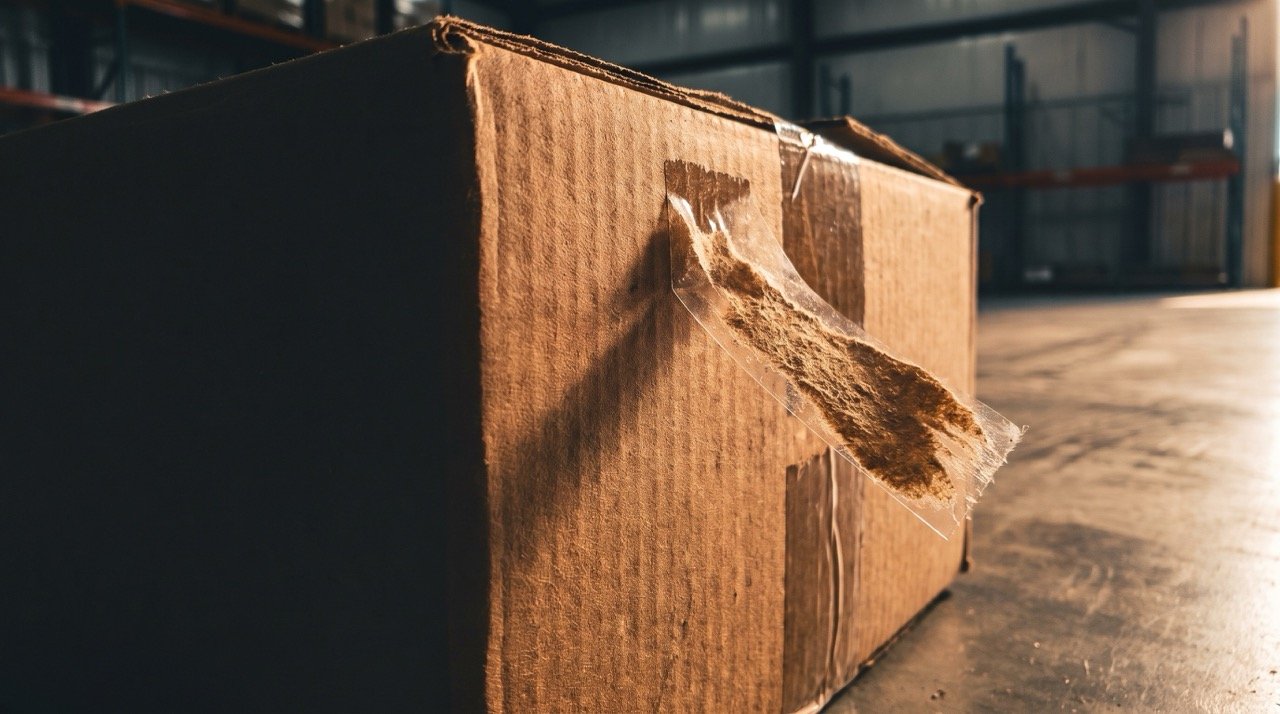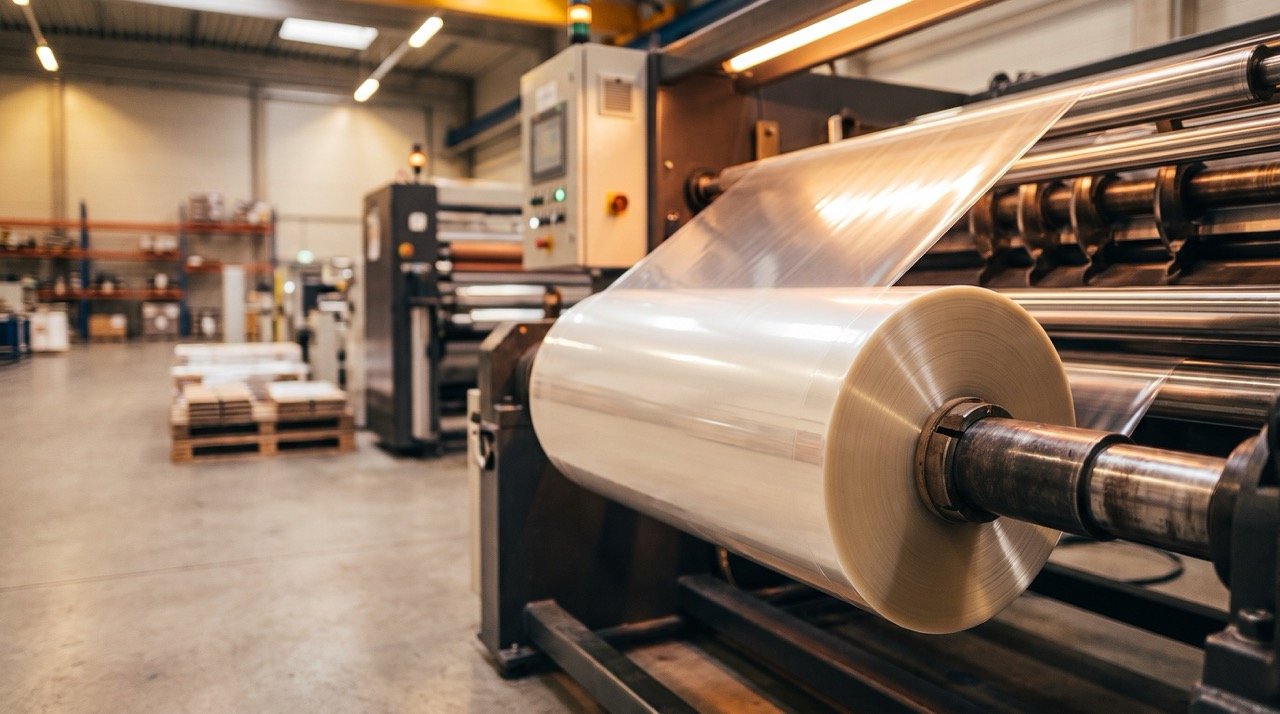
Almost every enquiry we receive names a width and a length, and almost none names a micron. Thickness is then chosen by price, which is how a carton that needed 50 micron ends up sealed with 38 and reopens in transit. Thickness is not a quality grade - it is a load calculation. This guide walks through the four inputs that decide it.
What micron actually measures
Micron on a tape specification is total caliper: the BOPP film plus the adhesive layer. A 45 micron tape might be 28 micron of film carrying 17 micron of adhesive, or 32 micron of film with 13 of adhesive. Those two rolls behave completely differently even though the datasheet number matches.
Film thickness governs tensile strength - how much pull the tape survives before it snaps. Adhesive thickness governs conformability and wet-out - how well the tape flows into the surface it is stuck to. A heavy carton on smooth board needs film. A light carton on rough recycled board needs adhesive.
Input one: carton weight and how it is handled
Start with the loaded weight of the carton and how many times it will be lifted, dropped, stacked and re-handled before it is opened. Weight alone is not the whole story: a 12 kg carton that moves once from packing bench to pallet is an easier job than a 6 kg carton that passes through four sorting hubs.
- Up to 5 kg, single handling: 38 to 40 micron is normally sufficient
- 5 to 15 kg, palletised and warehoused: 42 to 48 micron
- 15 to 25 kg, or multi-hub courier movement: 50 to 55 micron
- Above 25 kg, or export and long-haul: 55 to 65 micron, often with an H or L seal pattern
Input two: the board you are sealing
Recycled corrugated board is the single most common reason a seal fails at the right micron. Recycled liners are dustier, more porous and more fibrous than virgin kraft, so the adhesive has less clean surface to key into and loses tack as it soaks into the fibre.
On high recycled content board, adding film thickness does not help - the tape is not breaking, it is lifting. What helps is more adhesive and a longer wet-out time, which means specifying a higher coat weight rather than a higher total micron, and pressing the seal properly rather than laying the tape on.
Input three: hand dispenser or automatic sealer
Automatic case sealers apply consistent pressure and a consistent length of tape every time, so they tolerate thinner tape than a packing bench does. Hand application varies operator to operator, and thin tape splits at the blade, curls back on itself and gets thrown away - a wastage cost that quietly overtakes the saving on micron.
Machine rolls also need controlled unwind force. A tape that unwinds too tightly will stall or snap on a high-speed sealer even when its thickness is correct on paper, which is why machine grade rolls are specified by unwind force as well as micron.
Input four: storage temperature and shelf time
Acrylic adhesives continue to build bond strength for up to 24 hours after application, and they lose initial tack in cold conditions. A carton sealed in an air-conditioned packing hall and immediately loaded into a chilled vehicle has far less time to develop its bond than one that sits on a pallet overnight.
If cartons are sealed and moved within minutes into cold storage, specify for the cold condition, not the packing hall condition. In practice that usually means a higher adhesive coat weight rather than a thicker film.
A quick way to test before you commit
Order sample rolls of two adjacent grades - the one you use now and one step up - and seal twenty cartons of each with your own board, your own operators and your own equipment. Load them, move them, and open them after 48 hours. The grade that shows no lifting at the flap edges is your specification.
Judging tape by peeling a strip off the roll by hand tells you almost nothing about how it will hold a loaded carton for a week.
Questions We Are Asked About This
No. Thicker film resists snapping, but if a seal is failing because the tape is lifting off recycled board, extra film thickness changes nothing. Coat weight and surface contact are what matter in that case.
Most e-commerce parcels between 5 and 15 kg seal reliably at 42 to 48 micron, provided the tape is pressed down properly and the board is not heavily recycled.
It can, but you will be over-specifying most of your volume to protect the heaviest few percent. Two grades usually cost less overall than one heavy grade used everywhere.